
Drug Dialyzability in Hemodialysis and Peritoneal Dialysis
What makes a medication dialyzable and how it should be dosed and timed in patients receiving dialysis is impacted by complex interactions that influence drug removal in both hemodialysis and peritoneal dialysis.
What determines How Dialyzable a Drug Will Be?
The extent of drug removal during dialysis determines whether supplemental dosing is necessary during or following dialysis. Dialysis of Drugs is provided as a general guide regarding the effect of dialysis on drug clearance.The drugs included in the table are parent drugs. A primary pharmacologically active or toxic metabolite is included in a few cases, but often little information is known. When available, serum drug measurements may be appropriate for dosing individual patients. In all cases, patients should be monitored for clinical efficacy and toxicity.The extent to which a drug is affected by dialysis is determined primarily by several physicochemical characteristics of the drug, including molecular size, protein binding, volume of distribution, water solubility, and plasma clearance. Technical aspects of the dialysis procedure and dialyzing membrane also may determine drug dialyzability.

Molecular Weight
The movement of drugs or other solutes is largely determined by the size of these molecules in relation to the pore size of the hemodialysis or peritoneal membrane. Generally, smaller molecular weight substances will pass through the membrane more easily than larger molecular weight substances and will tend to be more dialyzable. The pore size of the peritoneal membrane is generally considered to be larger than that of the hemodialysis membrane. Thus, larger molecular weight substances often cross the peritoneal membrane to a greater extent than the hemodialysis membrane.
Protein Binding
The concentration gradient of unbound (free) drug across the dialysis membrane affects drug dialyzability. Drugs with a high degree of protein binding will have a low plasma concentration of unbound drug available for dialysis. Uremia may affect protein binding for some drugs, and protein binding may decrease in uremic serum. If this change is substantial, increased dialyzability of free drug may occur. Because the primary binding proteins for most drugs (albumin, α1-acid glycoprotein) are of large molecular size, the drug–protein complex is often unable to cross the dialysis membrane, especially the hemodialysis membrane. Since the peritoneal membrane does permit the passage of some proteins, there may be some limited drug–protein removal with peritoneal dialysis. Increased protein concentrations often occur in peritoneal effluent during episodes of peritonitis.
Volume of Distribution
A drug with a large volume of distribution is dispersed widely throughout tissues and is present in relatively small amounts in the blood. Factors that contribute to a large volume of distribution include a high degree of lipid solubility and low plasma protein binding. Drugs with a large volume of distribution are likely to be dialyzed minimally.
Water Solubility
Dialysis fluids are aqueous solutions. Thus, in general, drugs with high water solubility will be more dialyzable than those with high lipid solubility. Highly lipid-soluble drugs tend to be distributed throughout tissues, and therefore only a small fraction of the drug is present in plasma and accessible for dialysis.
Plasma Clearance
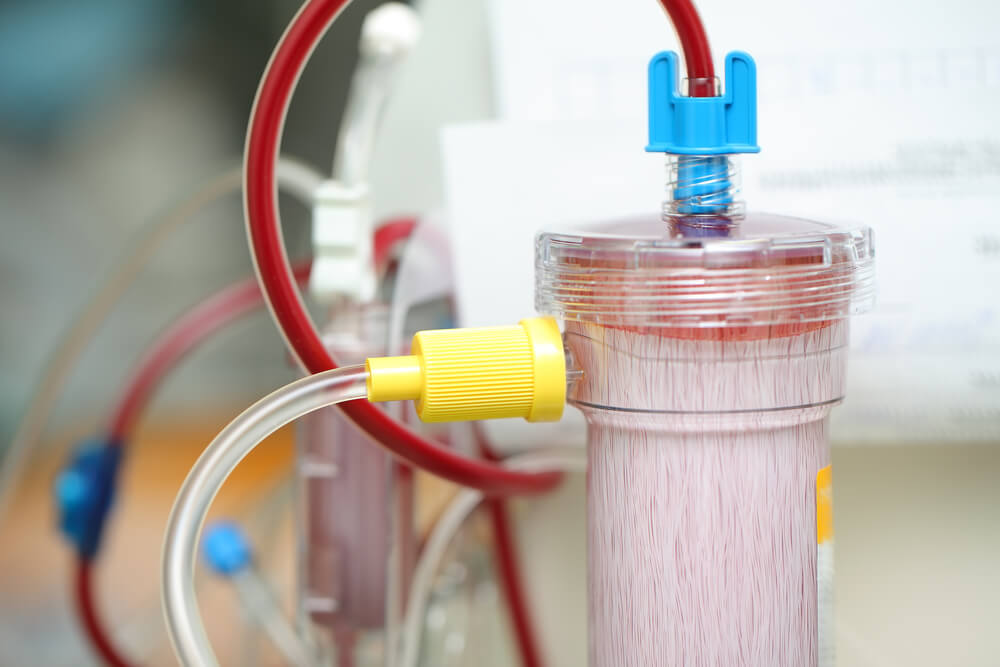
Dialysis Membrane
How Dialysis Modality Affects Drug Removal
Hemodialysis
An individual hemodialysis prescription includes blood and dialysate flow rates. In general, increased blood flow rates will deliver greater amounts of drug to the dialysis membrane. As the drug concentration increases in the dialysate, the flow rate of the dialysis solution also becomes important in overall drug removal. Greater dialysis can be achieved with faster dialysate flow rates that keep the dialysate drug concentration at a minimum.
Peritoneal Dialysis
Clinical Considerations and Limitations
High Permeability Dialysis
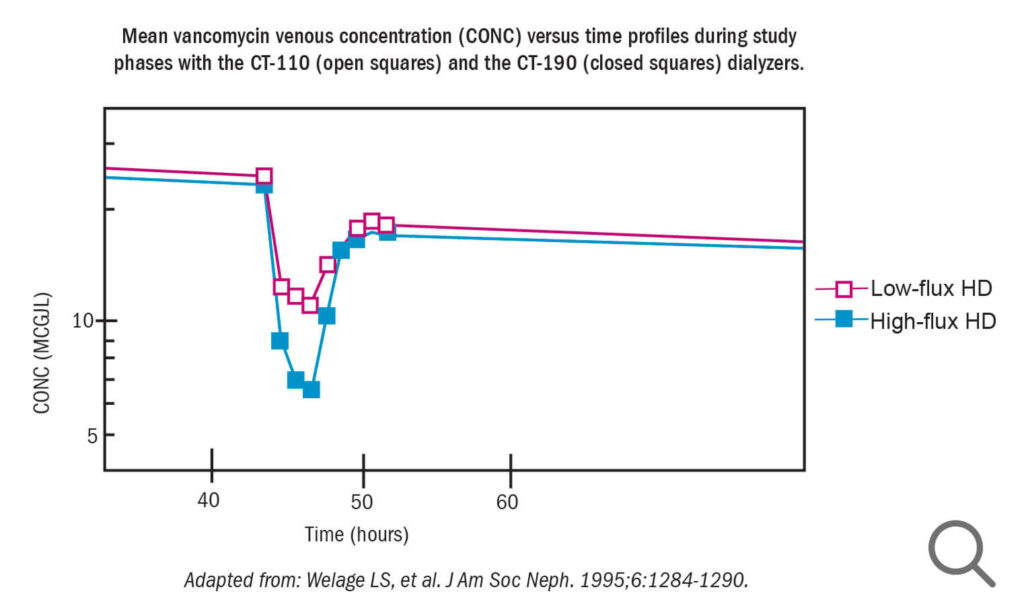
The United States Food and Drug Administration has classified high permeability dialysis membranes as those whose in vitro ultrafiltration coefficient (KUf) is greater than 8 mL/hour/mm Hg. Changes in dialysis membranes and changes in blood and dialysis flow rates may have clinically important effects on drug removal through the membrane, and drug removal from plasma is often enhanced compared with more conventional dialysis membranes. High permeability dialysis may remove drug from plasma at a rate exceeding the transfer of drug from tissues to plasma.
Rebound Plasma Drug Concentrations
As a result, a rebound of plasma drug concentrations following the conclusion of dialysis may occur as blood-tissue drug equilibration occurs. Patients receiving high permeability dialysis may require more drug compared with those receiving standard hemodialysis. Therefore, individualized therapeutic drug monitoring may be necessary.
Exclusion of Other Dialysis Methods
No information is provided on drug dialyzability with continuous renal replacement therapy or with plasmapheresis due to multiple different techniques and a lack of standardization in practice.
Summary of Drug Dialyzability
Drug dialyzability is determined by a complex interaction of many factors, including the characteristics of the drug and the technical aspects of the dialysis system. Published studies on drug dialyzability should specify the conditions that pertain during dialysis. Results from these studies should be applied with caution to other dialysis conditions.